1. System Size and Scale
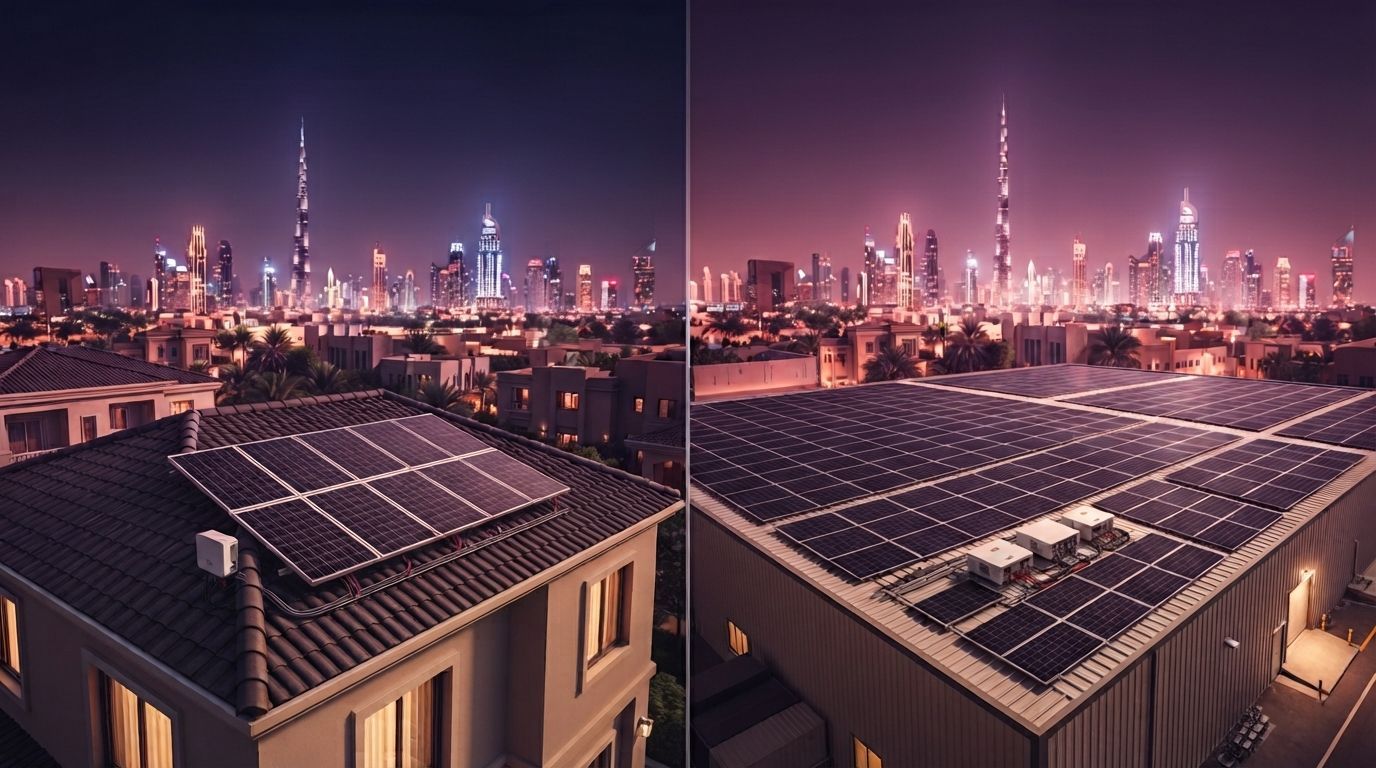
Residential solar systems are typically sized to match a household's energy needs, fitting on a standard home's roof. Commercial systems are often significantly larger, designed to offset the higher energy demands of a business — whether that's an office, warehouse, or retail space.
2. Installation Complexity
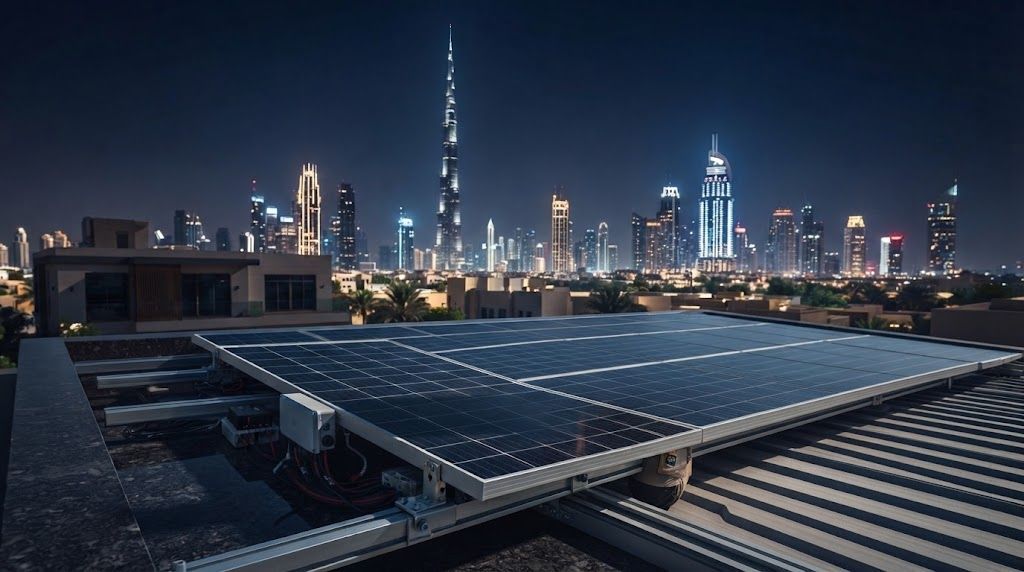
Commercial installations often involve more complex planning, larger roof areas or ground-mounted arrays, and coordination around ongoing business operations. Residential installations are generally more straightforward, with less disruption to day-to-day property use.
3. Energy Usage Patterns
Businesses often have different energy consumption patterns than households — many operate primarily during daylight hours, which can align well with solar generation and improve overall system efficiency and return on investment.
4. Financing and Investment Considerations
Commercial solar projects typically involve a larger upfront investment, but businesses may also see significant savings at scale over time. Residential systems usually offer a lower entry cost, with savings reflected directly in household electricity bills.
5. On-Grid or Off-Grid Flexibility
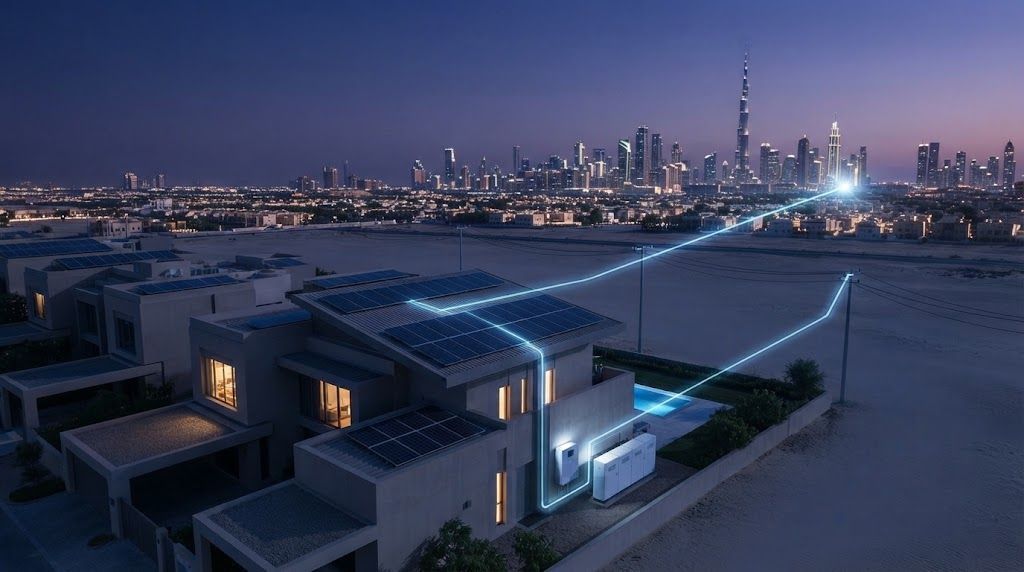
Both residential and commercial properties can choose between on-grid and off-grid solar, depending on location and requirements. Commercial properties in more remote or industrial areas may lean toward off-grid solutions, while most residential properties in urban Dubai typically opt for on-grid systems.
Which Solar Path Is Right for You?
Whether you're a homeowner looking to cut electricity costs or a business aiming to reduce operational expenses, the right solar solution depends on your property type, energy needs, and long-term goals.